



Silver Fiber Conductive Crew Neck T-Shirt

Sale price$50.005.0

This crew neck T-shirt uses silver fiber conductive textile construction for wearable RF shielding textile applications.

Key Details

  • Conductive textile layer: Silver fiber material supports RF attenuation as part of the garment construction.
  • Material composition: 42% silver fiber / 53% cotton / 5% polyester.
  • Wearable format: Short-sleeve crew neck style for apparel and technical textile use.
  • Use conditions matter: Fit, coverage, openings, seams, frequency range, and test method affect performance.

For order details, see our Shipping Policy and Return & Refund Policy.

Important: These products are technical textile products. No medical use is claimed.

Size: S
Color: Black

Not Every “Silver” Textile Is Built the Same

Silver can be added to a textile in very different ways. A surface-applied silver finish and a fabric built with silver-coated conductive fibers may both be described as “silver,” but their structure, durability and function are not the same.

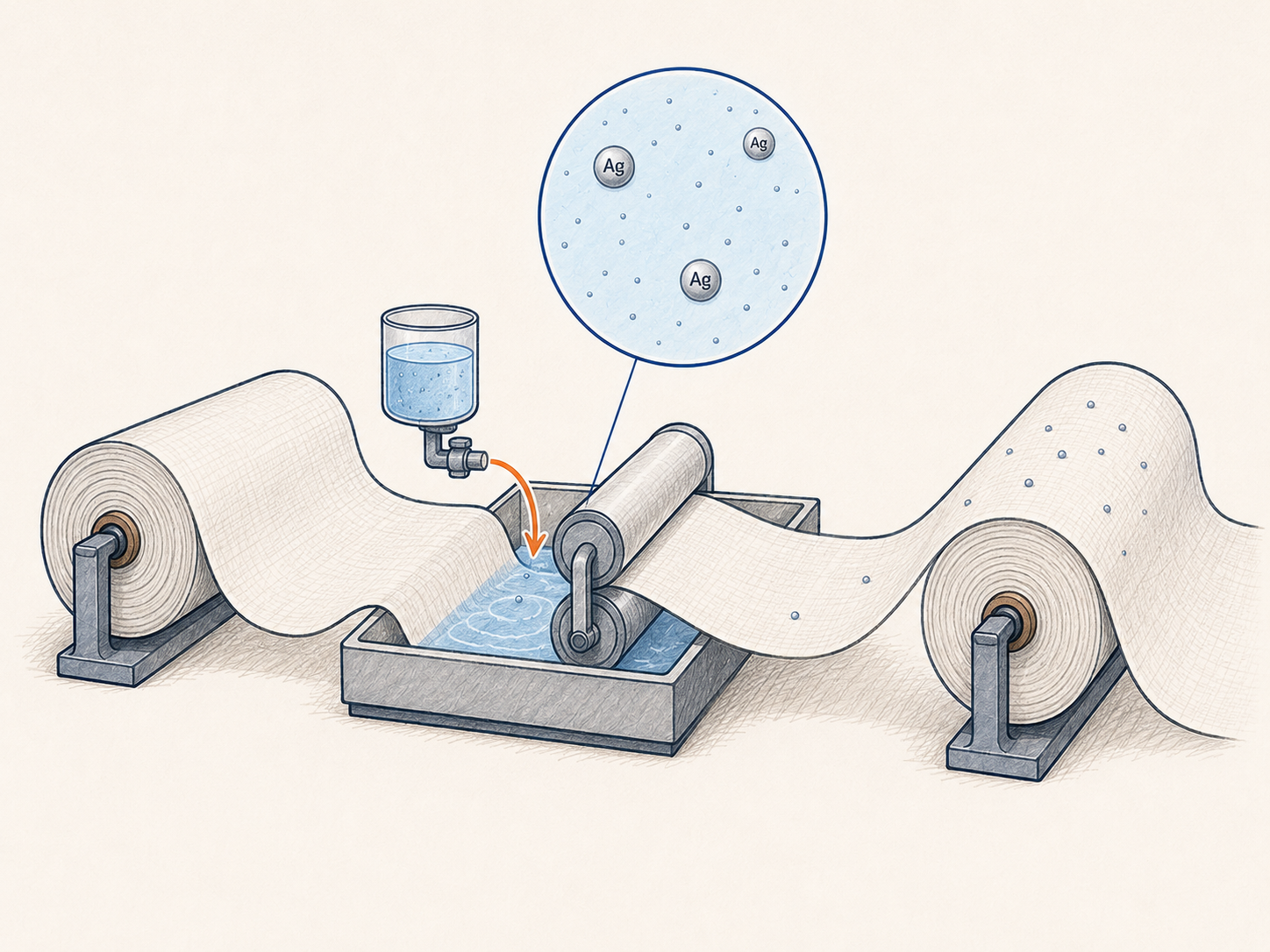
Illustration of silver additive coating applied to fabric by rollers

Silver Added as a Finish

Silver-containing particles or chemistry are applied to the textile surface.

These treatments are commonly used for odor-control or antimicrobial finishing. Their durability depends on how the silver is fixed to the textile, and the presence of silver alone does not create the continuous conductive path required for RF shielding.
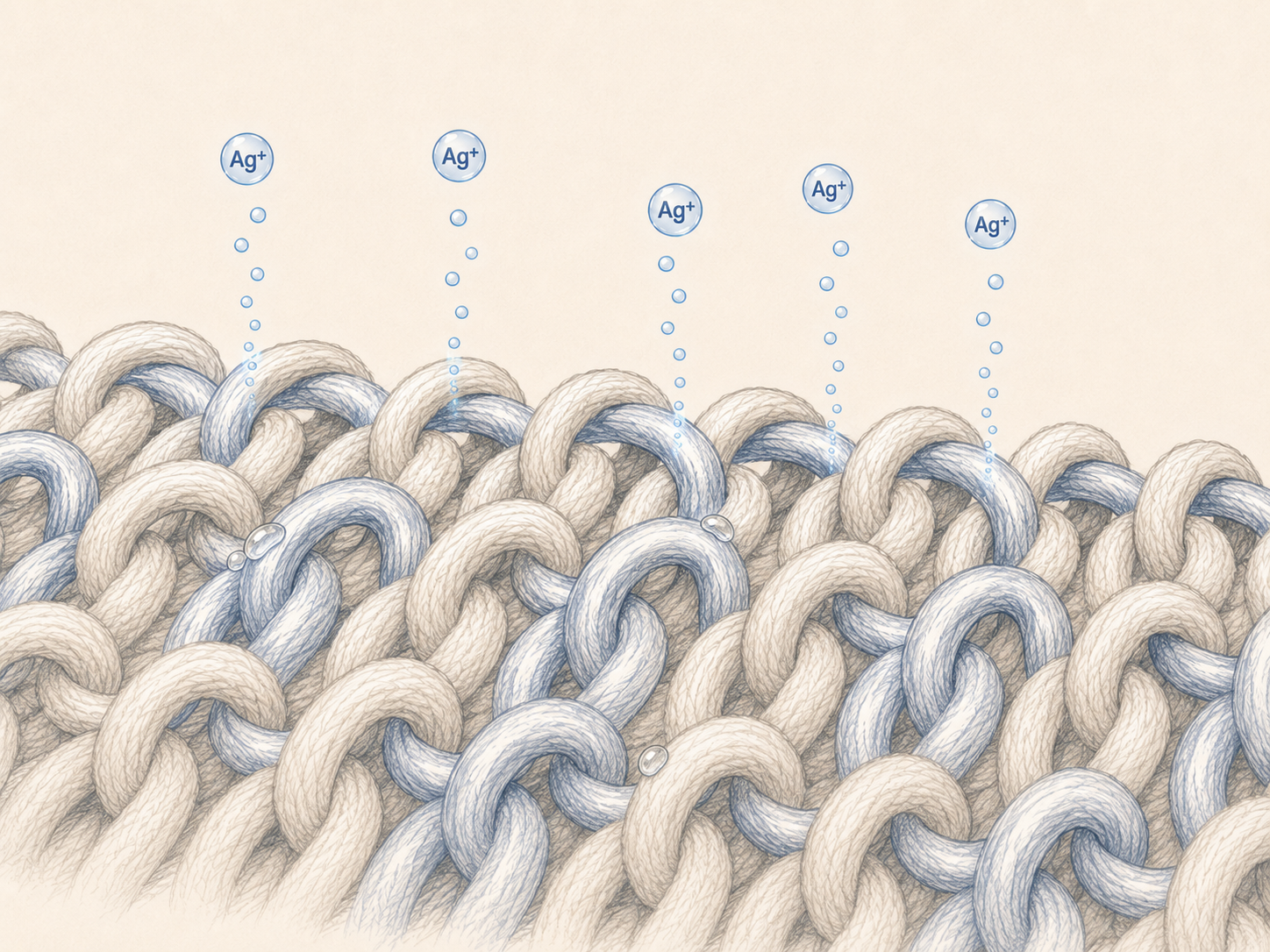
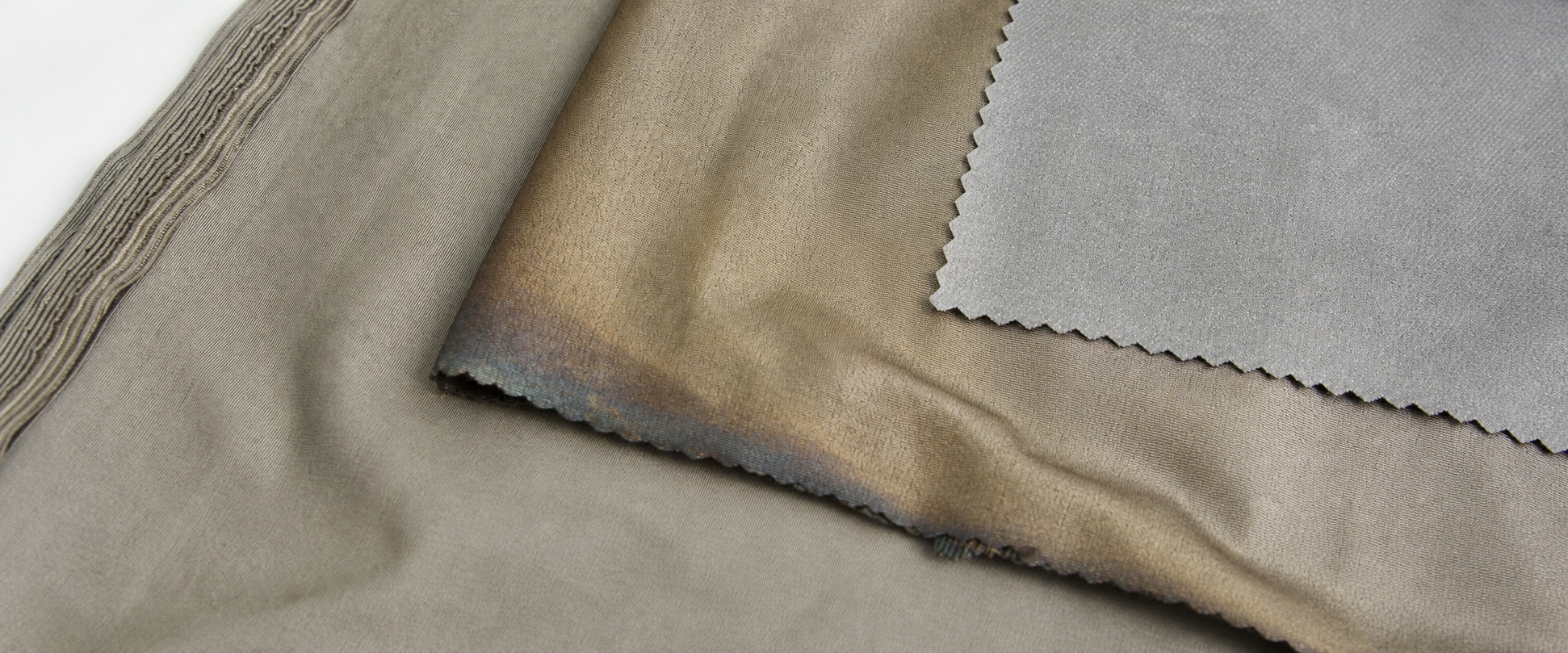
Illustration of silver ions released around silver-coated textile fibers

Silver Built into the Conductive Fiber

A continuous silver surface surrounds the fiber and becomes part of the textile structure.

In a silver-coated conductive textile, the metallic surface provides a connected conductive path. This supports RF attenuation and charge dissipation, and each of these functions needs its own test.

Conductive Path

Connected silver-coated fibers allow charge to move through the textile structure.

RF Attenuation

Shielding depends on conductive coverage, garment construction, openings, seams and test frequency.

Wear Over Time

Use, perspiration and laundering gradually wear the silver surface, so conductivity can change over the life of the garment and should be checked from time to time.

Unlike a temporary surface finish, the conductive silver surface is integrated into the fiber structure. It still experiences gradual wear through use, perspiration and laundering.

When Silver Changes Color

Yellow, brown or darker areas can appear as silver reacts with perspiration, humidity and compounds in the surrounding environment. This surface change can occur during normal use, but appearance alone cannot tell us how much shielding performance remains.

Silver-coated textile samples with visible gray and brown surface aging
An example of visible surface aging on a silver-coated textile.

Discoloration

The visible change in color. It describes the appearance, but not the exact chemical cause or remaining shielding performance.

Tarnish / Patina

A surface layer or aged appearance created by reactions with the surrounding environment. For silver textiles, “tarnish” is usually the more precise technical term; “patina” is a broader description of the aged appearance.

Coating Damage

Physical or chemical loss of the silver coating can interrupt conductive paths, raise local resistance and reduce functional performance.

Silver Apparel Questions

This is a technical textile product. No medical use or health outcome is claimed.

  • 5 stars: 1 (100%)
  • 4 stars: 0 (0%)
  • 3 stars: 0 (0%)
  • 2 stars: 0 (0%)
  • 1 star: 0 (0%)
A
Anonymous

fits great. comfortable