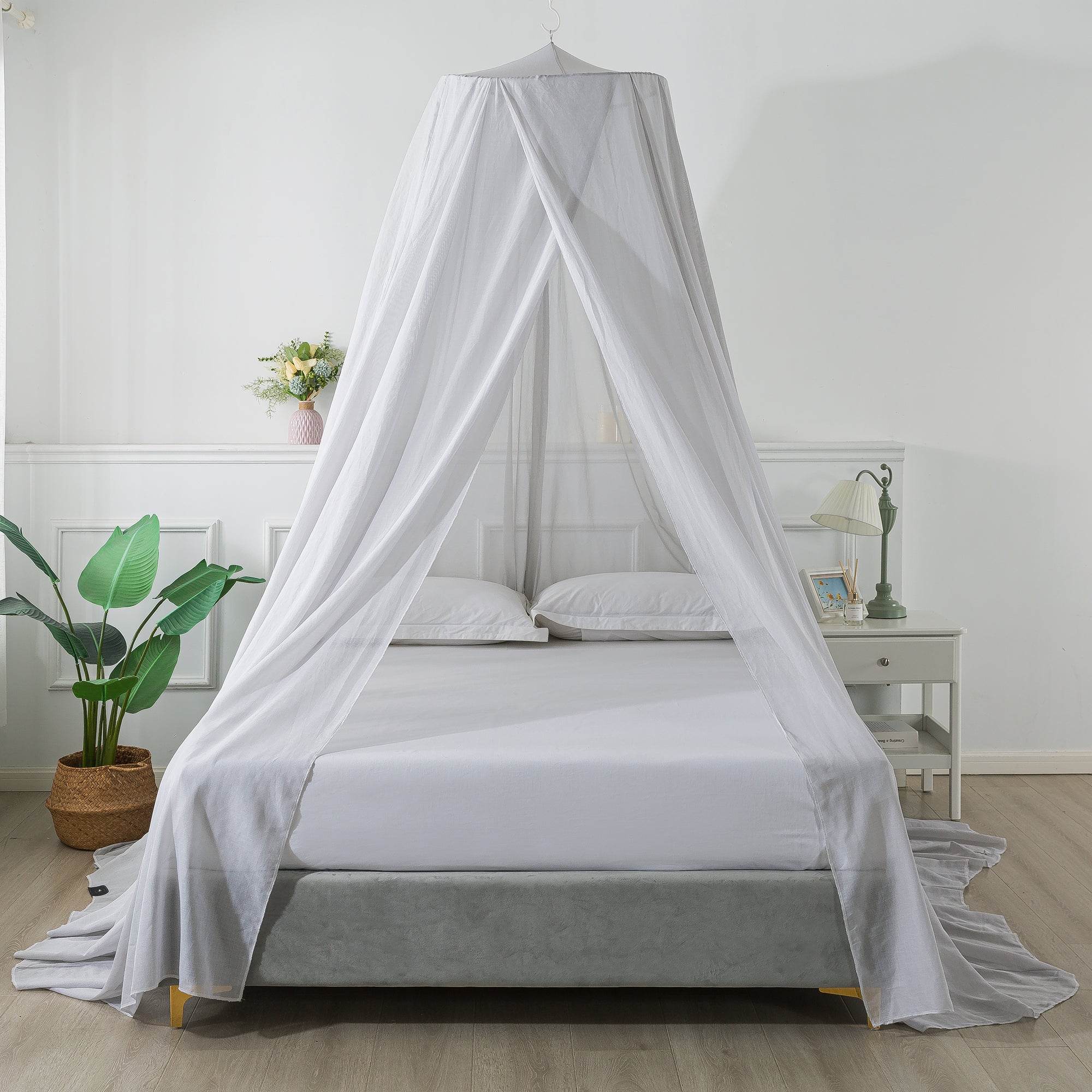
EMF shielding fabric is a textile woven or coated with conductive metals — most often silver, copper, or stainless steel — designed to attenuate electromagnetic fields (EMF) and radio-frequency (RF) energy. This guide explains how it works, how the main materials compare, how shielding is measured in decibels (dB), and how to choose the right fabric for apparel, bedding, enclosures, or industrial use.
What is EMF shielding fabric?
EMF shielding fabric is a flexible conductive textile engineered to attenuate electromagnetic radiation. A normal fabric (cotton, polyester) is electrically insulating and lets radio waves pass straight through. By adding a continuous conductive layer — silver applied to textile fibers, copper deposited on nylon, or stainless-steel filaments blended into the yarn — the fabric becomes a flexible Faraday shield that reflects and absorbs incoming waves.
It is used in EMF-protective clothing, grounding/earthing bedding, Faraday tents and canopies, signal-blocking pouches, medical and military enclosures, and as an OEM base material for shielding products.
How does EMF shielding fabric work?
Shielding relies on three physical mechanisms, the same principles behind a solid metal Faraday cage:
- Reflection — The conductive surface reflects most incoming RF energy, the dominant effect for high-frequency waves.
- Absorption — Energy that enters the material is converted to tiny eddy currents and dissipated as heat.
- Multiple internal reflections — Remaining energy bounces inside the conductive layer and weakens further before exiting.
The key requirement is an unbroken conductive path across the whole surface. This is why fiber-level metal coating (every thread conductive) outperforms a single sprayed-on layer, and why higher conductivity metals shield better at lower material weight.
Silver vs. copper vs. stainless steel: material comparison
The metal determines conductivity, durability, comfort, and cost. There is no single "best" — the right choice depends on the application.
| Property | Silver Fiber | Copper / Copper-Nylon | Stainless Steel |
|---|---|---|---|
| Conductivity | Highest of all metals | Very high | Moderate |
| Shielding effectiveness | High conductivity; verify frequency-specific test data | Excellent (high RF) | 20 dB reference, very stable |
| Skin comfort | Soft, antimicrobial, skin-friendly | Soft, flexible | Coarser, more rigid |
| Durability / oxidation | Can oxidize over time (light-gray finish resists this) | Oxidizes faster | Excellent — corrosion & wash resistant |
| Best for | Apparel, grounding bedding, canopies, sensors | Enclosures, tapes, flexible shields | Industrial, washable, high-durability |
| Relative cost | Premium | Mid | Most economical per shielding |
Explore each material directly: 100% Silver Fabric, Copper Infused Fabric, and Stainless Steel Fabric.
How shielding is measured: understanding decibels (dB)
Shielding effectiveness (SE) is measured in decibels (dB). Because the dB scale is logarithmic, every 10 dB represents a 10× reduction in field strength. Use this table to translate dB into real-world protection:
| Shielding (dB) | Equivalent power reduction | Attenuation reference |
|---|---|---|
| 10 dB | 90% | 10 dB reference |
| 20 dB | 99% | Good |
| 30 dB | 99.9% | 30 dB reference |
| 40 dB | 99.99% | 40 dB reference |
| 60–80 dB | 99.9999%+ | 60–80 dB reference |
For material selection, compare tested attenuation across the frequency bands relevant to the project. Finished-product performance also depends on construction, coverage, seams, openings, installation, and test method.
How to choose the right EMF shielding fabric
Work through this checklist before buying or specifying a fabric:
- Define the application. Apparel and bedding need softness and breathability; enclosures and tents prioritize maximum dB; industrial use prioritizes durability and washability.
- Match the frequency range. Confirm the fabric is tested across the bands you care about (cellular, Wi-Fi, 5G).
- Check the dB rating — with proof. Ask for test data (e.g., IEEE 299, MIL-STD-188-125, or ASTM D4935). A number without a test method is just marketing.
- Consider washability & oxidation. Silver oxidizes over time; a light-gray finish slows this and keeps a clean technical look. Stainless steel survives repeated washing best.
- Verify certification. For skin-contact products, look for OEKO-TEX® Class I to verify compliance with the applicable Class I limits for harmful substances in skin-contact applications.
- Confirm supply consistency. For OEM/B2B, batch-to-batch resistivity consistency matters more than a single sample's peak number.
Common applications
- EMF apparel — boxers, tees, hoodies and hats woven with silver fiber. See EMF Apparel.
- Grounding / earthing bedding — conductive sheets that connect you to earth potential. See Earthing & Grounding.
- Faraday tents & canopies — textile enclosures designed to create reduced-signal sleeping and working spaces. See Faraday Tent.
- Industrial & defense — enclosures, signal control and EMI management. See Industrial & Defense.
- Conductive yarn (OEM) — raw silver-plated and stainless-steel yarn for textile manufacturers. See Silver Plated Yarn.
Frequently asked questions
Which metals are used for EMF/RF shielding?
Silver, copper, and stainless steel are all used in conductive shielding textiles. The appropriate material depends on conductivity, textile construction, durability, care requirements, frequency range, and verified test data for the intended application.
Does EMF shielding fabric really work?
Yes — when it maintains a continuous conductive surface. A properly constructed silver, copper, or stainless-steel fabric measurably reduces RF field strength, verifiable with a field meter or standardized tests such as IEEE 299 or ASTM D4935. Effectiveness drops if the conductive layer is broken, worn, or has large gaps.
How long does EMF shielding fabric last?
Lifespan depends on the metal and care. Silver can slowly oxidize, gradually reducing conductivity; a light-gray finish and gentle, infrequent washing extend its life. Stainless-steel fabrics are the most durable and tolerate repeated washing with minimal performance loss.
Can I wash EMF shielding fabric?
Usually yes, but follow the maker's instructions: hand-wash or gentle cycle in cold water, no bleach, no fabric softener, and air-dry. Harsh detergents and high heat degrade the conductive coating. Stainless-steel blends are the most wash-tolerant.
What is the difference between EMF and RF shielding?
EMF (electromagnetic field) is the broad term covering both low-frequency electric/magnetic fields and high-frequency radio waves. RF (radio frequency) refers specifically to the higher-frequency end — cellular, Wi-Fi and 5G. Conductive shielding fabrics are highly effective against RF; low-frequency magnetic fields require different, heavier materials.
YUNJIA TEXTILE manufactures silver-fiber, copper, and stainless-steel conductive textiles available through faradayfiber.com, including OEKO-TEX® Class I certified options for skin-contact applications. Browse all conductive fabrics →

Leave a comment
This site is protected by hCaptcha and the hCaptcha Privacy Policy and Terms of Service apply.