
Body contact
Skin should contact the conductive surface, or the actual bedding arrangement should be tested.
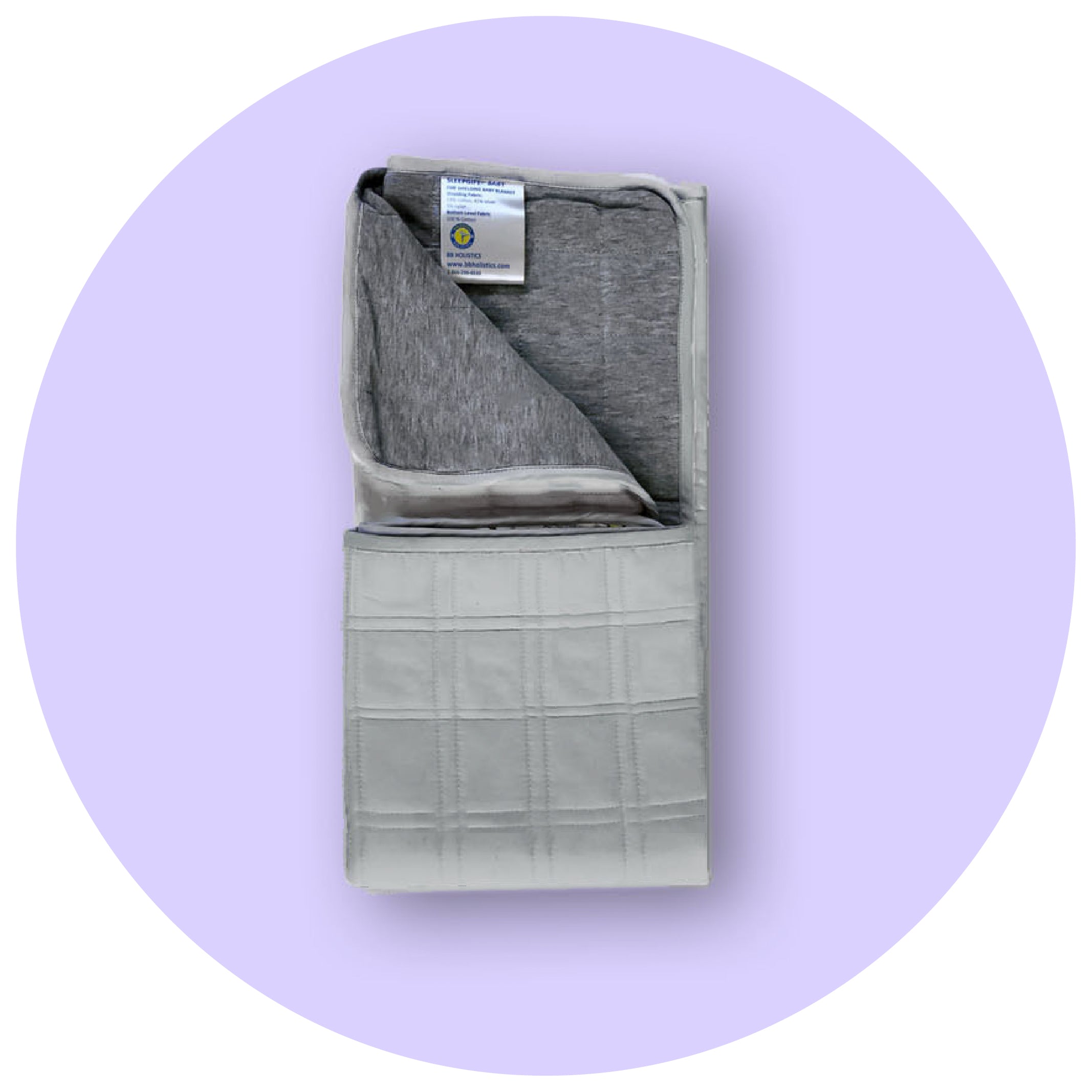

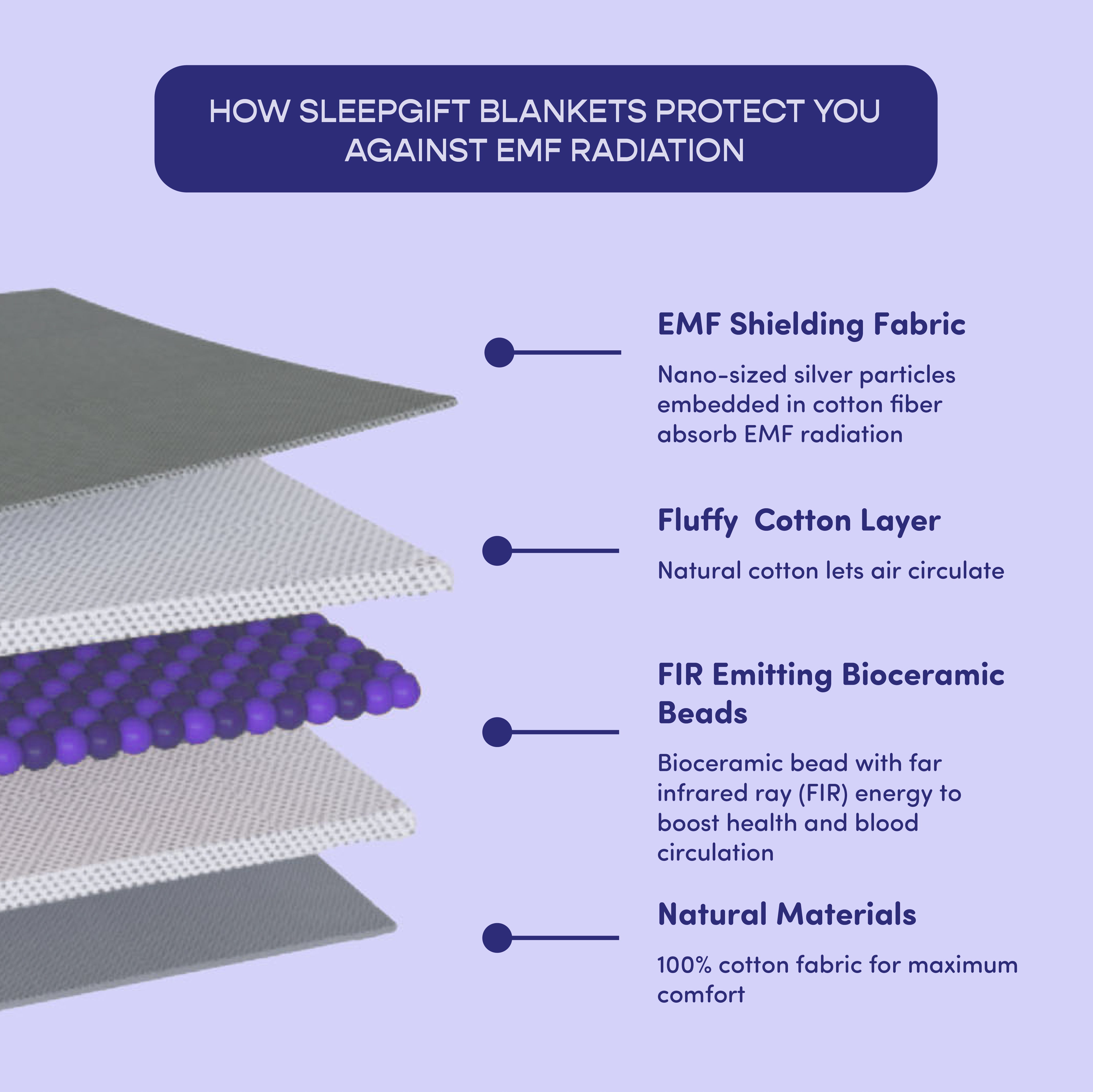



This weighted blanket uses silver fiber conductive textile construction for RF shielding textile applications.
Spot clean or follow the care label. Do not bleach or iron conductive layers.
For order details, see our Shipping Policy and Return & Refund Policy.
Important: These products are technical textile products. No medical use is claimed.
A grounding sheet works only as part of a complete connection path. The conductive silver-fiber grid provides the contact surface, while the snap, grounding cord and a verified earth ground complete the system. The sheet is passive—it does not supply power.
Skin should contact the conductive surface, or the actual bedding arrangement should be tested.
The textile, snap and grounding cord must remain securely connected.
The outlet or grounding point should be checked before the sheet is used.
Conductive material alone is not a complete grounding system. Clothing or an added sheet may affect contact, so verify the arrangement you actually use.
Follow one clear sequence: fit the sheet, check the outlet, connect the cord, then verify the conductive surface.
Secure the fitted sheet over the mattress and keep the conductive surface available for the intended contact arrangement.
Use a compatible socket tester. Continue only when the outlet or grounding point shows a verified ground connection.
Press the snap fully into place, route the cord without tension and connect the designated ground-only plug.
Use the compatible product tester at several points on the conductive area, following the tester’s instructions.
Socket tester checks the receptacle before connection.
Product tester checks the conductive sheet after connection.
Neither tester measures health effects.
Care should protect the conductive textile pathway and the connector—not only the appearance of the sheet.
Retest the actual setup after washing, changing bedding layers, moving the sheet, replacing the cord, connector damage or inconsistent test results.