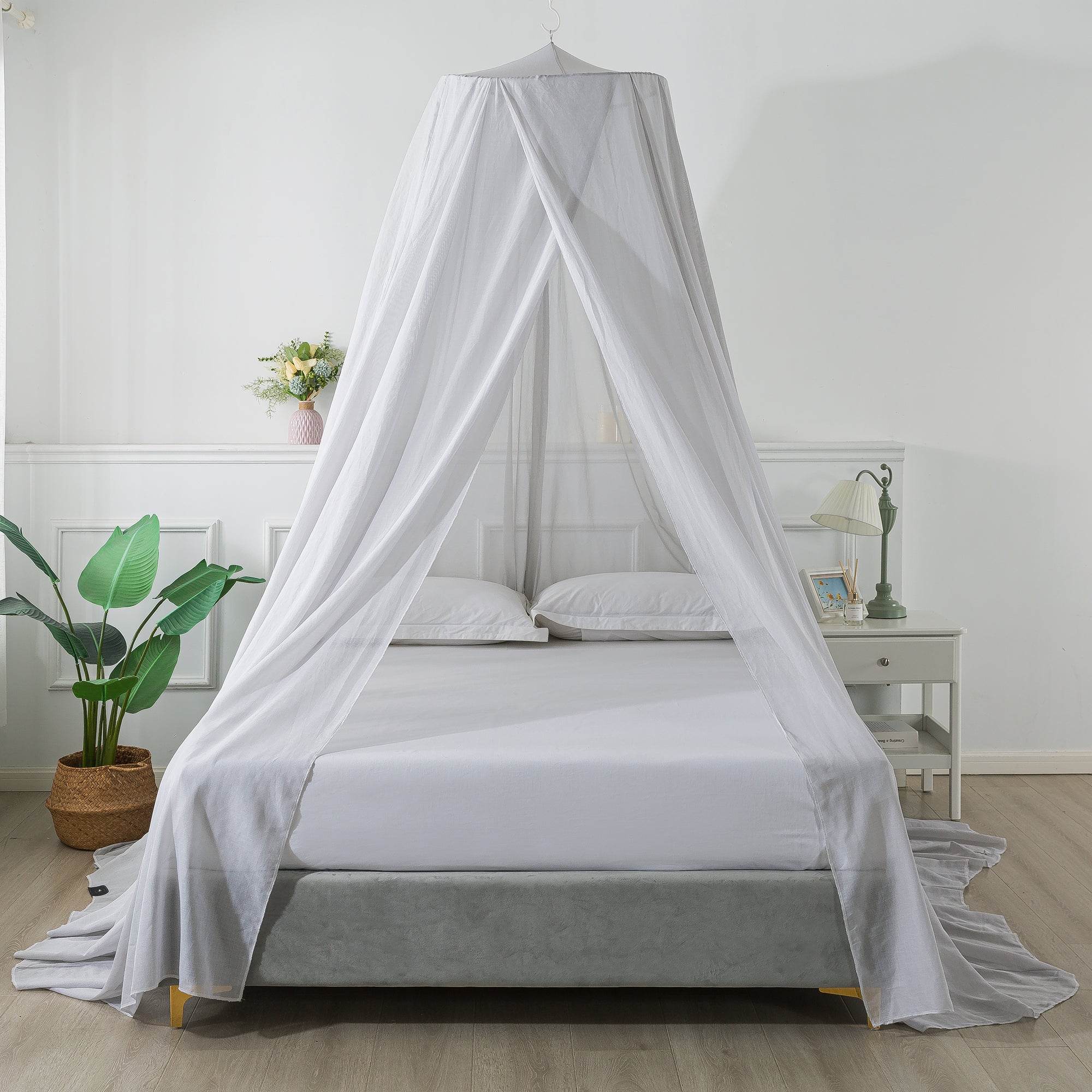

Silver Fiber RF Shielding Bed Canopy
$275.00

adiation is part of our life. Background radiation, coming primarily from natural minerals, is around us all the time. Fortunately, there are very few situations where an average person is exposed to uncontrolled sources of radiation above background. Nevertheless, it is wise to be prepared and know what to do if such a situation arises.
EMF/RF shielding projects should be evaluated through material construction, coverage, seams, openings, frequency range, installation, and test method. Conductive textiles can support reduced-signal spaces when they are selected and installed for the intended use.
Aerospace. Crucial shielding element for cables with coaxial construction. Taking advantage of the skin effect in higher frequency operation, a shield constructed with conductive fibers and even surpasses the performance of a much heavier copper-based braid. The flexibility makes an otherwise fragile cable significantly more robust for the most demanding applications. Meanwhile, conductive fiber negative coefficient of thermal expansion facilitates cable design when dealing with delicate dimensions.
E-Textile. Manufactured with traditional textile machinery such as sewing and embroidery equipment, and are also washable. They possess the same flexibility as traditional textiles but with the added advantage of a highly conductive outer metal coating.
Defense. Low observable technology require fabric with superior conductive for solutions like, warfighter uniforms, equipment, aircraft, ships, submarines, vehicles, missiles, and satellites that need to be less visible to radar, infrared, sonar and other detection methods.
Made with conductive shielding fabric, an EMF solution tent is a portable textile enclosure format for RF/EMF signal attenuation applications. Breathable fabric, conductive accessories, overlap, seams, openings, grounding conditions when relevant, frequency range, and test method all affect final shielding performance.
Canopy. A shielding canopy is a conductive textile enclosure designed to create a reduced-signal space around a bed or resting area. Buyers should compare coverage area, fabric construction, seam design, opening management, installation method, and available test data before selecting a canopy.

Faraday Cage/Tent. Faraday cages and tents are used for digital forensic, privacy, equipment, and controlled RF workspace applications. Signal attenuation depends on the enclosure design, conductive continuity, doors, seams, ventilation, shielded power or data pass-throughs, frequency range, and validation method.


